CORRECTION TO ASSIGNMENT, QUESTION NUMBER TWO (2)

Image result for FREE PICTURE DOWNLOAD OF assignment

Question number two: A cross between different individuals with genotypes Tt and Tt for height was carried out.

i. Represent the percentage tall and the percentage short.

ii. What percentage is homozygously dominant, heterozygous, and homozygously recessive?

iii. What percentage is homozygous?


Answers:

When Tt and Tt is crossed, they will produce these possible genotypes in their first filial generation

TT

Tt

Tt

tt

The genotypes TT and Tt are phenotypically tall, while the genotype tt is phenotypical short. Since there are four genotypes, each genotype is 25% in 100%. Therefore, three genotypes are tall, being TT, Tt, and Tt.

i.e. 25*3 = 75

to sub-question i, the percentage phenotypically tall and short are 75 and 25, respectively.

Tall:short = 75:25

Sub-question ii. By homozygous dominant, it implies a gene in diploid organism, which has the two alleles being dominant (TT), the dominant here implies that a copy of an allele being present is enough to express the trait (T). Heterozygous recessive implies that the gene has one dominant and one recessive allele (Tt), while homozygous recessive implies that both alleles of the gene are recessive. By recessive, it implies that the phenotype is only expressed when the alleles are in pair (tt).

From

TT

Tt

Tt

tt

Percentage homozygous dominant is 25% i.e. only one set out of four sets is present.

Percentage heterozygous is 50% i.e. two sets out of four sets are present

Percentage homozygous recessive is 25% i.e. only one set out of four sets is present.

For sub-question iii. the percentage homozygous is 50%. because there is two homozygous genotypes (TT & tt) out of the four genotypes.

TIMETABLE FOR BIO 101 QUIZ; STRICTLY FOR PRESCO CAMPUS

TIMETABLE FOR BIO 101 QUIZ; STRICTLY FOR PRESCO CAMPUS

PASSWORD WILL BE SHARED WITH YOUR CLASS CAPTAINS; ENSURE YOU PARTICIPATE DURING YOUR DEPARTMENTAL APPROVED TIME; REPORT ANY CHALLENGE IMMEDIATELY TO YOUR CLASS CAPTAIN.


DEPARTMENT START DATE/TIME END DATE/TIME
MEDSURG 3/3/2026; 17:00:00 4/3/202; 06:00:00
NURSING 4/3/202; 08:00:00 5/3/202; 06:00:00
MEDLAB 5/3/202; 08:00:00 5/3/202; 20:00:00
PHYSIO 5/3/202; 22:00:00 6/3/202; 14:00:00
ANATOMY 6/3/202; 16:00:00 6/3/202; 23:30:00


A FRESH TIMETABLE FOR BIO 151 QUIZ (PRESCO CAMPUS)

A FRESH TIMETABLE FOR BIO 151 QUIZ (PRESCO CAMPUS)

Every student is advised to follow the instructions regarding this quiz strictly, as there will be no second opportunity. Ensure you register to enable participation in the quiz, attempt the questions only once, and use a properly internet-enabled device.

GOODLUCK

DEPARTMENT START (DATE & TIME) STOP (DATE & TIME)
MEDSURG 14/02/2026; 00:01 AM 14/02/2026; 10:00 PM
NURSING 15/02/2026; 00:01 AM 15/02/2026; 10:00 PM
PHYSIOLOGY 16/02/2026; 00:01 AM 16/02/2026; 12:00 NOON
ANATOMY 16/02/2026; 02:00 PM 16/02/2026; 10:00 PM
MEDLAB 17/02/2026; 00:01 AM 17/02/2026; 10:00 PM

A FRESH SCHEDULE FOR BIO 101 QUIZ (PERMANENT SITE)

A FRESH SCHEDULE FOR BIO 101 QUIZ (PERMANENT SITE)

Every student is advised to follow the instructions regarding this quiz strictly, as there will be no second opportunity. Ensure you register to enable participation in the quiz, attempt the questions only once, and use a properly internet-enabled device.

GOODLUCK

DEPARTMENT START (DATE & TIME) STOP (DATE & TIME)
COMPUTER SCIENCE 13/02/2026; 00:01 AM 13/02/2026; 4:00 PM
APPLIED MICROBIOLOGY 13/02/2026; 6:00 PM 14/02/2026; 02:00 PM
BIOTECHNOLOGY 14/02/2026; 06:00 PM 15/02/2026; 4:00 PM
BIOCHEMISTRY 15/02/2026; 6:00 PM 16/02/2026; 10:00 AM
HEATH EDUCATION 16/02/2026; 12:00 PM 16/02/2026; 6:00 PM
APPLIED BIOLOGY 16/02/2026; 8:00 PM 17/02/2026; 10:00 AM
GEOLOGY 17/02/2026; 12:00 NOON 17/02/2026; 03:00 PM
PHYSICS 17/02/2026; 05:00 PM 17/02/2026; 7:00 PM
INDUSTRIAL MATHS 17/02/2026; 9:00 PM 17/02/2026; 11:00 PM

Study Nursing in Canada with Scholarship: Lester B. Pearson International Scholarship 2026

INTRODUCTION


If you dream of studying Nursing in Canada with full financial support at a globally ranked university, the Lester B. Pearson International Scholarship at the University of Toronto (U of T) is one of the most prestigious opportunities available to international students.

This scholarship is specifically designed to recognize students who demonstrate exceptional academic achievement, creativity, leadership potential, and strong commitment to community service. Nursing applicants who meet these criteria are strongly encouraged to apply.

Lester B. Pearson International Scholarship at the University of Toronto

The Lester B. Pearson International Scholarship is one of the most prestigious fully funded scholarships in Canada for international undergraduate students. Offered by the University of Toronto, this scholarship supports outstanding students—including those pursuing a Bachelor’s degree in Nursing—who demonstrate academic excellence, leadership, and community impact.

For students searching for nursing scholarships in Canada for international students, this opportunity stands out as a true full-ride scholarship.

About the University of Toronto (U of T)

The University of Toronto is consistently ranked among the top universities in the world and is globally recognized for excellence in nursing education, health sciences, and medical research.

Studying nursing at U of T provides:

  • Access to world-class faculty and facilities

  • Strong clinical training within Canada’s healthcare system

  • A globally respected nursing degree


What Is the Lester B. Pearson International Scholarship?

The Lester B. Pearson International Scholarship is a fully funded undergraduate scholarship awarded annually to exceptional international students admitted to the University of Toronto.

Named after Lester B. Pearson, Nobel Peace Prize laureate and former Canadian Prime Minister, the scholarship aims to develop future global leaders through education.

This scholarship is open to students applying for undergraduate programs, including Bachelor of Nursing and health-related degrees.

What Does the Scholarship Cover?

This is a 100% fully funded scholarship in Canada, covering all major study and living expenses for four years:

  • ✔️ Full tuition fees

  • ✔️ Textbooks and academic materials

  • ✔️ Incidental and compulsory university fees

  • ✔️ On-campus accommodation (residence)

  • ✔️ Living expenses associated with residence

This makes it one of the best nursing scholarships in Canada for international students.


Who Is Eligible to Apply?

To qualify for the Lester B. Pearson International Scholarship, applicants must:

  • Be an international student (non-Canadian)

  • Be in their final year of secondary/high school or recently graduated

  • Have an outstanding academic record

  • Demonstrate leadership skills and community involvement

  • Be applying to the University of Toronto for the first time

  • Be nominated by their high school (mandatory)

    Why This Scholarship Is Ideal for Nursing Students

  • This scholarship is perfect for students who want to:

    • Study Nursing in Canada with a full scholarship

    • Gain international exposure in healthcare education

    • Become leaders in clinical practice, public health, or nursing research

    • Graduate without student debt from a world-ranked university

    📌 It is one of the top fully funded Bachelor’s degree scholarships for Nursing in Canada

INTERESTED CANDIDATES SHOULD VISIT HERE

MID-SEMESTER QUIZ TIMETABLE FOR MEDICAL GENETICS

MID-SEMESTER QUIZ TIMETABLE FOR MEDICAL GENETICS

NOTE: ATTEMPT THE QUIZ ONCE. LOG IN TO PARTICIPATE ONLY DURING THE TIME ASSIGNED TO YOUR DEPARTMENT. REPORT ANY CHALLENGE

DEPARTMENTS START DATE/TIME END DATE/TIME
MEDSURG 14/01/2026; 4.00 PM 15/01/2026; 12 NOON
ANATOMY 14/01/2026; 4.00 PM 15/01/2026; 12 NOON
NURSING 15/01/2026; 12:05 PM 16/01/2026; 12 NOON
PHYSIOLOGY 15/01/2026; 12:05 PM 16/01/2026; 12 NOON
MEDLAB 16/01/2026; 12:05 PM 16/01/2026; 11:59 PM

BIOLOGY AS A SCIENCE OF LIFE

INTRODUCTION

Biology is a branch of science that studies life and living organisms. It is a vast discipline that examines various aspects of living systems, including their structure, function, growth, development, evolution, and interactions with the environment.

The study of biology is increasingly important in today’s world because of its profound implications for human life and the environment. There are several key reasons for studying biology.

Importance of Studying Biology

  1. Human Health and Medicine
    The study of biology helps in understanding human health and the development of medicines. It enables scientists to identify the causes and spread of diseases and to understand how the body responds to infections and disorders. This knowledge has led to the development of vaccines, treatments, and cures for diseases such as cancer. Advances in biological sciences, particularly genetics, have also contributed to personalized medicine tailored to individual genetic profiles.
  2. Environmental Protection and Conservation
    Biology promotes an understanding of ecosystems, species interactions, and the critical role of biodiversity. This knowledge supports the development of strategies to protect endangered species and conserve ecosystems that are essential for life on Earth. Additionally, biological studies provide insights into the effects of climate change on ecosystems and help develop sustainable solutions such as eco-friendly agricultural practices and renewable energy alternatives.
  3. Food Security and Agriculture
    Biological research has significantly improved crop and livestock production. Advances in genetics and biotechnology have enabled the enhancement of crop traits such as yield, nutritional quality, and resistance to pests and diseases, while also improving livestock health and productivity. Biology also provides knowledge of sustainable farming practices that reduce environmental impact and ensure adequate food supply for a rapidly growing population.
  4. Biotechnology and Innovation
    Biotechnology, which involves the application of biological knowledge to create new products, has become a major focus in biology. This includes the development of biofuels, biodegradable plastics, and new pharmaceuticals. Genetic modification and other biotechnological tools are used to address challenges such as food scarcity, genetic diseases, and environmental degradation.
  5. Improving Quality of Life
    The study of biology promotes healthy nutrition and lifestyle choices by explaining how the body processes food and how nutrients affect overall health. This understanding helps individuals make informed dietary decisions. Research on the brain and nervous system has also improved the treatment of mental health disorders such as depression, anxiety, and schizophrenia.
  6. Understanding Evolution and Ecology
    Biological studies of evolution explain how species change over time, providing insight into the history of life on Earth, human origins, and adaptive strategies of organisms. Ecology further explains how organisms interact with their environments, their ecological impacts, and strategies for managing environmental damage.
  7. Advancements in Scientific Research and Education
    Biology drives scientific research that deepens our understanding of life and stimulates curiosity and innovation. This growing body of knowledge informs public policy and decision-making in critical areas such as healthcare, environmental protection, and ethical considerations in science and technology.

Careers in Biology

A background in biology opens the door to a wide range of career opportunities, including:

  1. Research Scientist – Conducting experiments and research in fields such as genetics, microbiology, ecology, and pharmacology.
  2. Biotechnology Specialist – Developing biological products and technologies for medicine, agriculture, and industry.
  3. Environmental Consultant – Advising organizations on sustainability, conservation, and climate change mitigation.
  4. Healthcare Professional – Careers such as doctors, nurses, and medical researchers who apply biological knowledge to diagnose and treat diseases.
  5. Pharmacologist – Studying the effects of drugs and substances on living organisms to develop new medical treatments.
  6. Marine Biologist – Researching marine organisms and ecosystems, often focusing on conservation of aquatic environments.
  7. Forensic Scientist – Applying biological principles to legal investigations, including DNA analysis and examination of biological evidence.
  8. Genetic Counselor – Providing guidance to individuals and families regarding genetic conditions and inheritance patterns.
  9. Ecologist – Studying interactions between organisms and their environments, with emphasis on biodiversity and conservation.
  10. Zoologist – Investigating animal behavior, physiology, and genetics.
  11. Agricultural Scientist – Improving crop yields, pest management, and sustainable farming practices.
  12. Biological Technician – Supporting laboratory research by collecting data and maintaining scientific equipment.

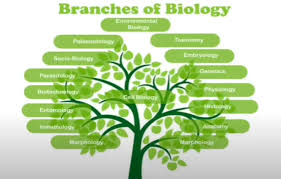
Branches of Biology

Biology comprises many specialized branches, each focusing on specific aspects of life:

  1. Molecular Biology – Studies the structure and function of biological molecules such as DNA, RNA, and proteins.
  2. Cell Biology – Examines the structure and function of cells, the basic units of life.
  3. Genetics – Focuses on heredity, genes, and genetic variation.
  4. Evolutionary Biology – Explores the origins and changes in species over time.
  5. Ecology – Investigates relationships between organisms and their environments.
  6. Physiology – Studies the functions and mechanisms of living organisms.
  7. Botany – The scientific study of plants.
  8. Zoology – The study of animals and their biological processes.
  9. Microbiology – Examines microorganisms such as bacteria, viruses, fungi, and parasites.
  10. Immunology – Studies the immune system and disease resistance.
  11. Biochemistry – Explores the chemical processes within living organisms.
  12. Neurobiology – Focuses on the nervous system and its influence on behavior.
  13. Developmental Biology – Studies growth and development from fertilization to maturity.
  14. Biophysics – Applies principles of physics to biological systems.
  15. Marine Biology – Studies life in marine and other saltwater environments.

Why Am I Different? The Biology of Human Appearance

INTRODUCTION

Many people wonder why they look the way they do. Some notice that they look different from their parents or close relatives, while others appear to resemble distant family members such as grandparents, great-grandparents, or uncles. In some cases, individuals seem to possess traits that have not been observed in their immediate family lineage. These observations often lead to curiosity and, sometimes, confusion.

Due to limited or inappropriate exposure to scientific knowledge, some people attribute physical appearance to spirituality, chance, or vague ideas of relativity, without understanding the biological mechanisms involved. However, human physical traits are largely explained by genetics and environmental influences.

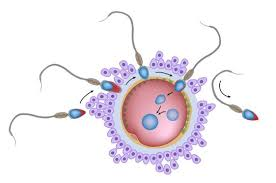
For reproduction to occur in humans, the male gamete (sperm), produced in the testes and released through the penis, must meet the female gamete (egg), which is released during ovulation. These gametes are haploid, meaning they each contain one set of chromosomes. Chromosomes are structures that house DNA (deoxyribonucleic acid), the biological material responsible for carrying genetic information.

When fertilization occurs, the sperm and egg fuse to form a diploid cell known as a zygote, which contains two sets of chromosomes, one from each parent. Although millions of sperm cells are released, only one successfully fertilizes the egg. If more than one sperm enters the egg, a condition called polyspermy occurs. Polyspermy is usually lethal because the excess centrosomes disrupt normal cell division and impair zygote development.

It is also important to note that fertilization determines whether the offspring will be male or female. To understand how this occurs, we must examine human chromosomes, particularly the sex chromosomes.


HUMAN CHROMOSOMES

The human genome consists of 23 pairs of chromosomes, each composed of a long DNA molecule containing millions of base pairs. These base pairs encode genes, which provide instructions for building proteins and determining traits such as physical appearance, susceptibility to certain diseases, and other biological characteristics.

Chromosome pairs 1 through 22 are known as autosomes, while the 23rd pair consists of the sex chromosomes, which determine an individual’s biological sex.

Humans possess two types of sex chromosomes: X and Y. Females have two X chromosomes (XX), while males have one X chromosome and one Y chromosome (XY). The X chromosome is often referred to as the “default” chromosome, whereas the Y chromosome contains genes responsible for male development. One such gene is the SRY (Sex-determining Region Y) gene, which initiates the formation of male reproductive organs.

Beyond sex determination, the X and Y chromosomes also carry genes that influence traits such as height, eye color, and other physical features. They are also involved in certain genetic conditions, including color blindness and Turner syndrome.


DOMINANT AND RECESSIVE GENES

In human genetics, genes occur in pairs and may exist in different forms known as alleles. Alleles can be either dominant or recessive. Dominant alleles are typically represented by uppercase letters, while recessive alleles are represented by lowercase letters.

A dominant allele is expressed whenever it is present, even if only one copy exists. For example, if brown eye color is dominant over blue eye color, an individual with one brown allele and one blue allele (a heterozygous condition) will have brown eyes. In contrast, a recessive allele is only expressed when both copies are present (a homozygous recessive condition).

After birth, individuals exhibit various traits. Traits that are controlled almost entirely by genes are called qualitative traits, while those influenced by both genes and the environment are known as quantitative traits. Qualitative traits are usually controlled by one or a few genes and show little environmental influence; examples include sex and albinism. Quantitative traits, such as height and body size, are controlled by many genes and are strongly influenced by environmental factors.

MACROPROPAGATION: A LOW-COST, FARMER-FRIENDLY TECHNIQUE FOR IMPROVED FOOD SECURITY

Macropropagation of Musa Species

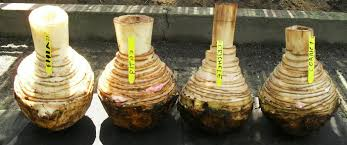
Macropropagation is a vegetative plant multiplication technique that involves the stimulation of multiple shoots from a single parent planting material (usually a corm) under controlled but non-sterile conditions. It is a low-cost, farmer-friendly alternative to tissue culture and is widely used for the rapid multiplication of Musa species (banana and plantain). The method relies on physical manipulation of the corm to break apical dominance, thereby inducing the production of several healthy suckers that can be transplanted to the field.


Construction of the Propagator

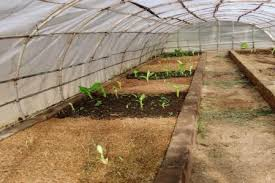
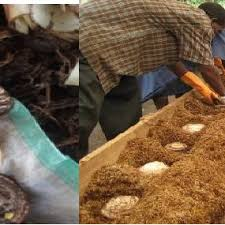
At this stage, the objective is to construct a facility known as a propagator, where the processed corms will be cultivated. The propagator is usually constructed using wooden planks and nails. Its dimensions depend on the available space, resources, and the number of corms to be managed. The height of the propagator is typically equal to the width of the wooden planks used.

The propagator is rectangular in shape and should be placed on a cemented floor or waterproofed ground to prevent roots from penetrating the soil beneath. Root penetration into the soil complicates shoot detachment, as the roots may be cut during harvesting. Plantlets without roots often experience difficulty in anchorage and nutrient uptake, which can lead to poor establishment or death. The propagator should also be located under shade to protect the corms and emerging shoots from direct sunlight.


Filling of the Propagator

Since the propagator serves as a cultivation medium, it must be filled with a suitable substrate. The substrates used are typically soilless and porous to allow easy harvesting of suckers and replanting of corms. Common substrates include sawdust, rice husk, spear grass, or similar materials.

Before use, the substrate must be sterilized using steam to eliminate pathogens. To achieve this, a reasonable quantity of water is poured into a drum containing stones. The water level should be slightly below the stones to ensure that the substrate does not come into direct contact with water during steaming. The substrates are bagged and placed on the stones, ensuring no contact between the bags and water. The drum is then covered with a lid and heated. Steaming is continued for about 30 minutes after the water begins to boil.

After steaming, the substrate is removed and spread evenly in a clean propagator until it reaches the height of the propagator. The substrate should be allowed to cool for at least 24 hours before planting the processed corms.


Sucker Collection and Corm Preparation

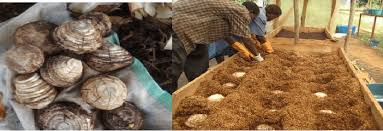
Healthy, disease-free sword suckers are sourced from the field. Preparation begins by removing the pseudostem and roots from the sucker. The corm is thoroughly washed in clean water to remove soil and plant debris.

Using a clean, sharp knife, the leaf sheaths of the corm are carefully peeled off one after another to expose the bud and meristematic region, leaving about 2 mm above the corm. To suppress apical dominance and prevent shooting from the top, the meristematic region is drilled or scarified by making an “X”-shaped incision at the top of the corm.

The prepared corms are surface-sterilized by soaking them in a sterilant for 20 minutes. The sterilant may consist of water mixed with a fungicide or 10 ml of sodium hypochlorite in 25 litres of water. After sterilization, the corms are air-dried for about one day before planting in the propagator.


Planting of Corms

The processed corms are planted into the substrate in the propagator, maintaining a spacing of about 10 inches between one corm and another, as well as between the corms and the sides of the propagator. Care should be taken to ensure that the corms do not touch the floor and that they are adequately covered with the substrate.


Propagator Maintenance and Management

Immediately after planting, the substrate should be watered thoroughly until it is well soaked. The first irrigation usually requires a larger volume of water compared to subsequent irrigations. Thereafter, watering should be carried out every one or two days, depending on moisture levels, while avoiding waterlogging. Excessive waterlogging can create favourable conditions for disease vectors such as mosquitoes, thereby increasing the risk of malaria.

Measures should also be taken to control rodents and lizards, as they may feed on the corms and emerging shoots. Additionally, these animals may pose safety risks to humans working around the propagator.


Preparation of Pots and Weaning Media

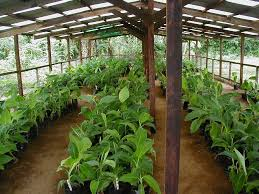
After shoot detachment, the plantlets are not transferred directly to the field. Instead, they are first established in a weaning medium and environment to help them overcome transplant shock. Nylon pots measuring approximately 4 inches in width and 5 inches in height (or larger) are prepared by creating drainage holes at the base and slightly above the base to prevent waterlogging.

The weaning medium is prepared by mixing topsoil and compost manure in a ratio of 3:1. The prepared medium is then used to fill the pots in readiness for planting the detached shoots.


Detachment or Harvesting of Shoots

Within 4 to 8 weeks, each corm may produce between 3 and 7 shoots, depending on the Musa species, corm viability, and efficiency in executing the macropropagation process. Shoots with three to four leaves are detached using a very clean and sharp knife.

During detachment, care should be taken to avoid damaging the roots, and a reasonable amount of corm tissue should be cut along with the shoot. This attached tissue serves as a food reserve until the plantlet becomes fully acclimatized and can independently source nutrients from the soil.

The detached shoots are planted into the prepared weaning pots and watered carefully at intervals to prevent waterlogging and nutrient loss. After two to four weeks, the plantlets are ready for field transplantation.

For field planting, holes large enough to accommodate the pots are dug. The nylon pots are carefully cut open using a razor blade or sharp knife, and the entire plant with its weaning medium is placed into the hole and covered with soil. Transplanting is most successful when carried out at the onset of the rainy season.